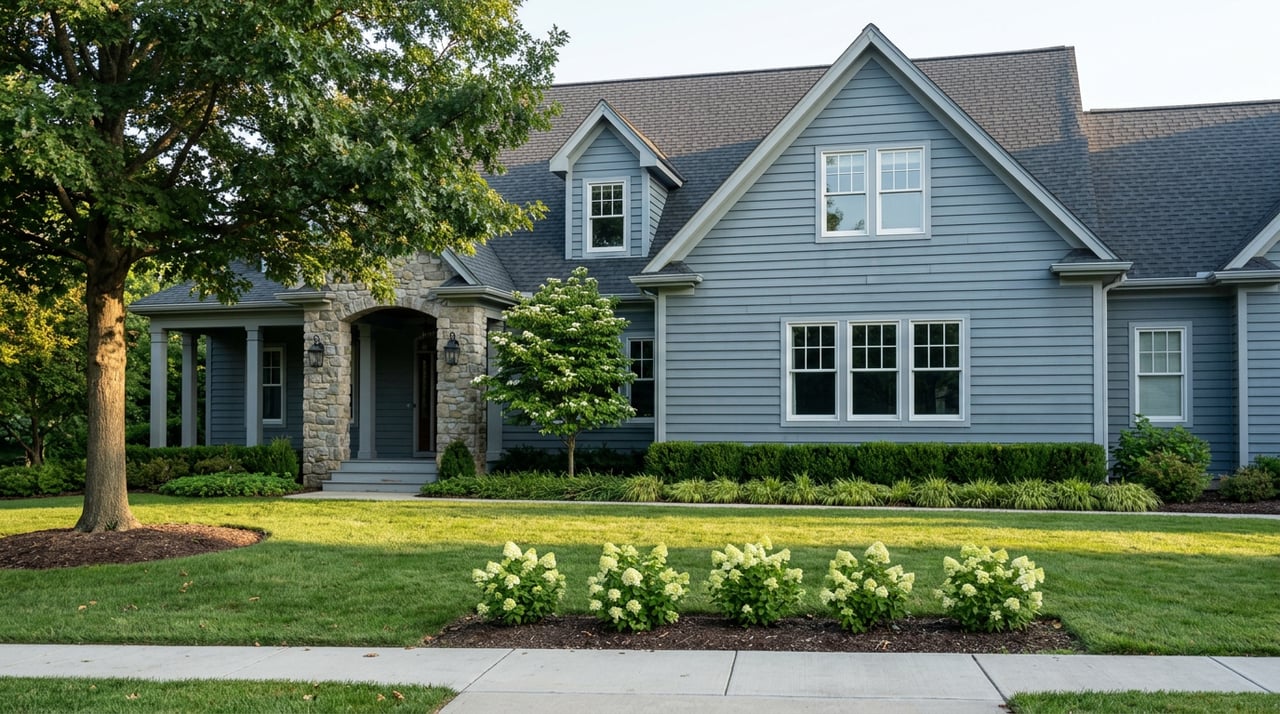
A house on Sunset Drive in Millburn sold for $965,000 this year. The buyer wasn't planning to live in it. By the time the new owner is finished, that lot will carry a 5,900-square-foot, six-bedroom home worth roughly $3 million, according to Hoodline's reporting on the project. Nobody paid $965,000 for the house. They paid it for the ground underneath.
That's the story most buyers comparing Millburn to Short Hills never quite get told. They see two ZIP codes inside the same town, assume the price gap is about which side has better schools or a shorter train platform, and move on. It isn't. The mechanism is older than either ZIP code, and a zoning change the Township Committee passed this year is actively rewriting how much of it a buyer can convert into finished square footage.
One Town, Two ZIP Codes, One Tax Rate
Short Hills has never been its own municipality. It's an unincorporated section inside Millburn Township, governed by the same Township Committee, taxed at the same municipal rate, and zoned by the same Planning and Zoning Boards that oversee the village side. Millburn's 2025 municipal tax rate was 2.019 percent, applied township-wide, with no separate rate for the 07078 side of town, according to the Short Hills Association's property tax guide. On an average residential assessment of roughly $1.3 million, that produces an average annual bill near $26,300. State tax tables show a little more than half of that bill, 51.2 percent, funds the Millburn Township School District that both sides of town attend, with 26.4 percent going to municipal operations and 22.5 percent to Essex County, per figures Patch reported and Hoodline cited in its recent teardown coverage.
Run the math on identical inputs and the output should be identical too. It isn't. Millburn's township-wide average home value stood at about $1.3 million at the end of July 2026, up nearly 10 percent year over year, per Jersey Digs data cited by Hoodline. Portal-tracked sale prices for the Short Hills side of town have been running in the $2.4 million to $2.6 million range on a trailing basis through the middle of 2026, roughly double. Same tax rate, same school levy, same governing body. Different market entirely.
What an 1870s Planned Suburb Still Prices Today
The gap traces back to how the two sides of Millburn Township were built, not to anything a buyer today can negotiate around. Short Hills began in the 1870s as a planned commuter development, assembled by Stewart Hartshorn on roughly 1,500 acres of what had been farmland and woods. Hartshorn's plan called for large, irregular parcels that followed the area's glacial terrain rather than a grid, and that founding geometry is still on the tax maps. Parcels in Short Hills sections like Old Short Hills and Hartshorn commonly run from four-tenths of an acre past a full acre. Closer to Millburn's downtown and train station, village lots are frequently a fifth of an acre or smaller, and some streets on the Millburn side carry lots as narrow as 36 feet.
That difference in the underlying land is the actual product being sold. A buyer paying $2.5 million in Short Hills isn't paying for a better version of the same house available in the village for $1.3 million. They're paying for more land under an identical set of municipal services, in a town where large, buildable interior lots simply don't turn over often.
| Millburn village side | Short Hills interior sections | |
|---|---|---|
| Typical lot size | ~0.12 to 0.2 acre | ~0.4 to 1+ acre |
| Township average value context | ~$1.3M township-wide (July 2026) | ~$2.4M to $2.6M trailing sale range (mid-2026) |
| Municipal tax rate | 2.019% (2025) | 2.019% (2025), same township |
| School district | Millburn Township Schools | Millburn Township Schools |
The Rule That Just Rewrote the Math
Millburn Township has been tightening the rules around how much house a given lot can support for several years, starting with Ordinances 2645-23 and 2646-23. This year the Township Committee went further. Ordinance 2756-26, passed in 2026, rewrites the definition of Residential Floor Area Ratio, the formula that determines how large a house can be relative to its lot, specifically to resolve inconsistent treatment of sloped-ceiling attic spaces and double-height great rooms, according to TAPinto's coverage of the vote. Township officials framed the change as a way to create a more objective standard and keep new construction in scale with existing neighborhoods, following Master Plan recommendations to monitor teardown impact.
That single definitional change lands differently depending on which side of the township a buyer is looking at. On a Short Hills lot with room to spare, a more precise FAR formula mostly affects how an architect draws the attic. On a tighter Millburn village lot already built close to its ceiling, the same formula can be the difference between a project that clears zoning and one that needs a variance hearing. Millburn's Zoning Board of Adjustment has been working through exactly that friction all year, with early 2026 filings for additions and expansions on Short Hills streets including Ridge Terrace, Farbrook Drive, Campbell Road, and Moraine Place, alongside applications on Millburn-side streets like Cypress Street, Ridgewood Road, and Glen Avenue. Some of those Millburn-side applications were withdrawn rather than argued through a hearing, a pattern worth noticing if a lot under consideration is already tight against setback or coverage limits.
Same Play, Both Sides of the Line
The Sunset Drive project isn't an outlier confined to the village side. In March 2025, a 2,385-square-foot house in Short Hills sold in five days for more than $620,000 above asking, with the buyer's intent to demolish and rebuild larger, according to Jersey Digs reporting cited by Hoodline. The economics driving both trades are the same: Essex County's single-family supply fell 9.3 percent year over year to just 633 available homes in July 2026, a 2.3-month supply against a roughly six-month benchmark for a balanced market, per New Jersey Realtors data reported by Hoodline. Sellers in the county received an average of 111.9 percent of original list price that same month, the highest ratio of any New Jersey county.
When land is that scarce, the smallest, least remarkable house on a good lot becomes the target, not the obstacle. That's true whether the lot sits on a 36-foot-wide Millburn village street or a half-acre Short Hills parcel. The address on the mailbox changes the ceiling on the eventual sale price. It doesn't change the logic of the purchase.
Questions Worth Asking Before You Compare Two Listings
A few things worth confirming before treating a Millburn listing and a Short Hills listing as directly comparable:
- Pull the actual lot size and block and lot number rather than relying on the listing description. Township tax maps and the county GIS system will confirm what you're really buying.
- Ask whether a renovation or teardown plan has been checked against Ordinance 2756-26's current FAR definition, not an older standard. A plan that worked on paper in 2023 may not clear review the same way in 2026.
- Check whether the specific lot has existing nonconforming conditions. Several 2026 Zoning Board applications, on both sides of the township, involved additions to homes that already carried variances from prior years.
- Don't assume a Short Hills mailing address guarantees the larger lot. The nine recognized sections within Short Hills vary in lot size and character, and some Millburn village blocks sit closer to the train and downtown than certain outer Short Hills sections do.
A Few Direct Questions
Is Short Hills a separate town from Millburn? No. Short Hills is an unincorporated section of Millburn Township. It has its own ZIP code, 07078, but the same municipal government, school district, and tax rate apply on both sides.
Do Short Hills homeowners pay a different tax rate than Millburn homeowners? No. Millburn Township applies one municipal tax rate townwide, 2.019 percent as of the 2025 rate year. What differs is the assessed value tied to typically larger Short Hills lots, which produces a higher dollar tax bill even at the same rate.
Does the new FAR ordinance apply differently in Short Hills than in Millburn village? The ordinance itself applies townwide. Its practical effect differs because it interacts with each lot's existing size and coverage, and tighter village lots are more likely to bump against the new definition than larger Short Hills parcels.
If you're comparing a Millburn village listing to one in Short Hills and the numbers aren't adding up the way the portals suggest they should, that's usually where the real conversation starts, not where it ends. Shannon Xavier works both sides of this township regularly and can walk through what a specific lot, zoning designation, and FAR calculation actually mean for your search. Schedule Your Concierge Consultation to start with the details that matter for your address, not the township average.
