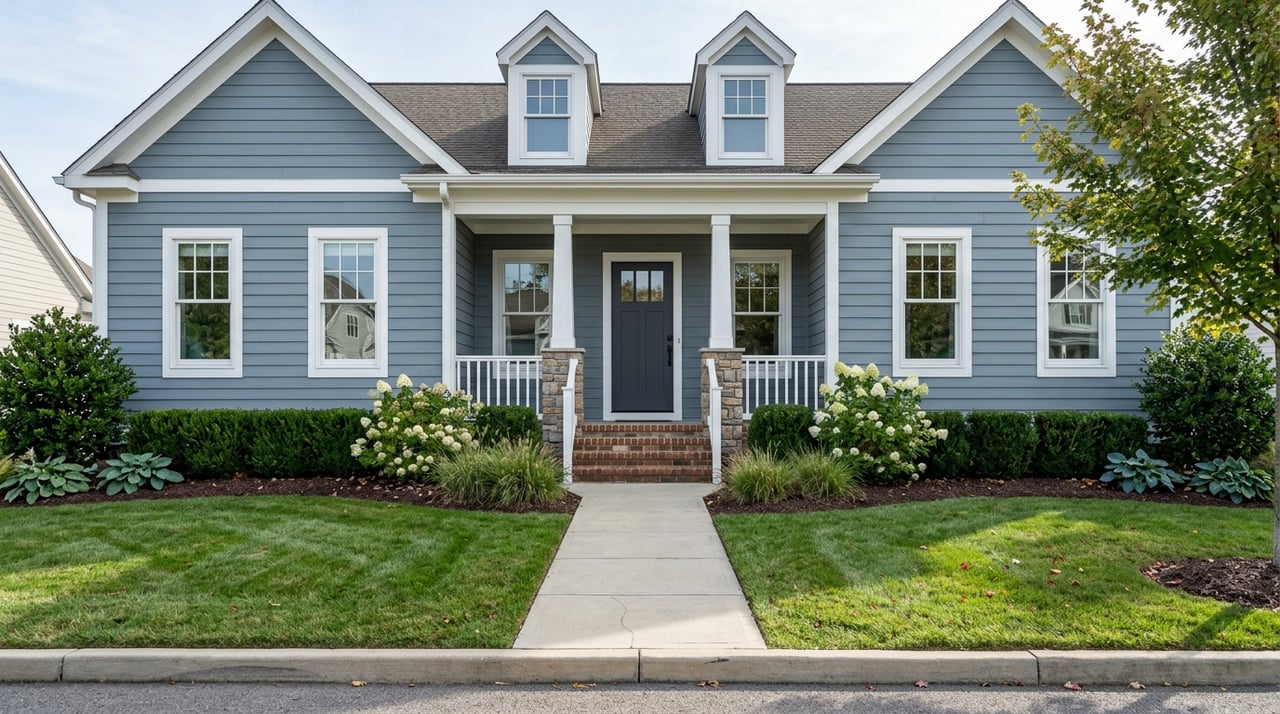
If you are drawn to homes with personality, Millburn offers more than one polished look. This is a town where architecture reflects different eras, changing tastes, and even the shape of the land itself. If you want a house that feels visually compelling and livable, understanding Millburn’s home styles can help you spot the right fit faster. Let’s dive in.
Why Millburn appeals to design-focused buyers
Millburn’s housing stock is layered, not one-note. The township traces its development from colonial settlement to a 19th-century mill and factory economy, then into a Victorian residential community. That long evolution helps explain why you can find very different architectural styles within the same town.
The local landscape also matters. Millburn notes that its glacial topography created knolls and irregular surfaces that later suburban builders found attractive. For you as a buyer, that means homes often relate to the land in ways that can affect curb appeal, floor plan, and natural light.
Millburn also identifies two historic districts, Short Hills Park and Wyoming, as central to its architectural identity. If you care about design, those areas help show how the town’s visual character has been shaped over time. They also remind you that style here is not just about trends, but about preservation and long-term stewardship.
Colonial homes in Millburn
One of the most common styles you are likely to encounter is the Colonial Revival, along with many updated Colonials. Millburn’s historic-resource inventory references Colonial Revival repeatedly, and the township’s design guidelines note that the center-hall colonial remained popular after World War II in simplified forms.
For buyers, these homes often stand out for their symmetry and formal entry sequence. You may see balanced facades, centered front doors, and room layouts that feel orderly and predictable. That can be appealing if you like classic architecture and a floor plan with clear separation between formal and casual spaces.
Many Colonials in Millburn have been updated rather than replaced. That creates a useful middle ground for design-minded buyers who want architectural structure with newer kitchens, improved flow, or refreshed finishes. The key is to look beyond the listing photos and ask how well the updates respect the original proportions and details.
What to notice in a Colonial
When you tour a Colonial, pay attention to:
- Entry symmetry and facade balance
- Original window proportions
- Masonry and roofline consistency
- Whether interior updates support the home’s formal structure
- How easily the layout could adapt to your day-to-day life
A beautiful Colonial often succeeds because the updates feel calm and natural, not forced. If the bones are intact, even modest modernization can feel timeless.
Tudor and picturesque revival homes
If you want something with more texture and visual drama, Millburn also offers Tudor Revival and other picturesque revival styles. The township’s inventory shows many Tudor Revival examples from the 1920s and 1930s, along with occasional Spanish Revival homes. In Short Hills Park, documentation describes a broad range of domestic architecture from 1870 to 1928, including Shingle, Queen Anne, and Stick styles.
These homes often appeal to buyers who respond to craftsmanship and layered details. You may notice varied rooflines, strong masonry, distinctive entries, and a more storybook quality than a Colonial typically offers. They can feel especially memorable from the street, which matters if you care about architecture as much as square footage.
That said, these homes often reward a careful eye. The most design-compelling examples are usually the ones that still retain core exterior features and original character. Millburn’s Historic Preservation Element notes that integrity is tied to a property’s ability to express the designer’s intentions, and it warns that non-original siding, replacement windows, and roof changes can significantly affect historic character.
Why preservation details matter
For design-focused buyers, original details are not just sentimental. They help define scale, proportion, and visual authenticity. A house can be renovated beautifully, but once key exterior elements are altered, some of what made it architecturally special may be harder to recover.
That is why it helps to study:
- Original masonry
- Roof shape and massing
- Window size and placement
- Entry details
- The overall coherence of the exterior
Postwar homes with renovation upside
Not every compelling Millburn home is prewar. The township’s design guidelines say that after about 1950, split-levels, ranch houses, and bi-levels became increasingly common. Township inventory pages also record Styled Ranch, Contemporary, and Modern houses on several Millburn streets.
For many buyers, these homes offer the clearest renovation canvas. Split-levels often take advantage of a slightly sloping site, ranches are typically one-story rectangles or L-shapes, and bi-levels place living space above a lower level. In practical terms, these forms can create interesting opportunities for reworking circulation, light, and indoor-outdoor flow.
Postwar and modern homes are also associated in Millburn’s design guidelines with larger glass areas, picture windows, and sliding glass doors. If natural light is high on your list, this group of homes deserves serious attention. Even when finishes are dated, the relationship between interior space and daylight can be very strong.
Why split-levels deserve a second look
Split-level homes can be easy to overlook if you focus only on facade style. In Millburn, they may feel especially well matched to the hilly terrain described by the township. That connection between house form and site can create a more grounded, natural feel than you might expect from a quick online search.
For a design-minded buyer, a split-level can offer:
- Distinct zones for daily life
- Flexibility across half-levels
- Good renovation potential
- Strong connection to the lot’s slope and grade
- Opportunities to improve light and openness
Focus on layout, not just labels
In Millburn, the smartest design question is often not, “What style is this?” but, “How does this home live?” The township’s design guidelines highlight the popularity of the center-hall colonial, while split-level and bi-level forms organize daily life across different levels. That means your experience of the home may matter more than the style name in the listing.
As you compare options, think about how easily a home could be opened up, expanded, or brightened without losing its character. A formal Colonial may offer grace and structure, but it may need more careful planning if you want modern flow. A ranch or split-level may offer easier reconfiguration, especially if you value casual living and stronger sight lines.
A practical buyer checklist
When touring homes in Millburn, it helps to evaluate each one through a design lens:
- Light: Where does natural light enter, and how consistent is it throughout the day?
- Flow: Does the floor plan support the way you actually live?
- Integrity: How much original character remains?
- Potential: Can you improve the home without fighting its architecture?
- Site fit: Does the house sit naturally on the lot and work with the terrain?
That approach can help you avoid paying only for finish level while missing what really gives a house long-term design value.
Historic districts and renovation rules
If you are considering an older or architecturally distinctive home, renovation flexibility is a major part of the decision. In Millburn, that often depends on whether the home is located in a historic district. The township’s FAQ says owners in a historic district may need Historic Preservation Commission approval.
The township’s Historic Preservation Element states that a Certificate of Appropriateness is required before exterior work can begin on items such as roof repairs, siding, decks, additions, window and door replacements, fences, walls, signs, solar panels, and sidewalks. Zoning approvals and building permits still apply to most exterior and site improvements as well.
This does not mean a historic home is off-limits for design-minded buyers. It means you should approach changes thoughtfully. The township’s preservation standards frame successful additions as those that preserve the essential form and integrity of the original house.
What that means for your renovation plans
In Millburn, the strongest renovation outcomes are often careful updates, not total reinventions. Improving circulation, adding storage, and increasing daylight may be possible without erasing the original facade or overall massing. For buyers who appreciate architecture, that can be a strength rather than a limitation.
The township’s Historic Preservation Element also cites broader preservation studies showing that residential historic district designation is often associated with value gains of 5% to 35%. That is general context rather than a Millburn-specific pricing claim, but it does reinforce why preserved character can matter over time.
Choosing the right Millburn style for you
If you love symmetry, tradition, and rooms with defined purpose, an updated Colonial may feel like the best match. If you are drawn to texture, craftsmanship, and a more expressive exterior, Tudor Revival or other picturesque styles may speak to you more directly.
If your priority is light, renovation flexibility, or a more casual plan, postwar ranches, split-levels, bi-levels, and some contemporary or modern homes may offer the best fit. In Millburn, every style category has a different design story. The right choice depends on how you want to live, not just what photographs well.
A thoughtful home search here should balance architecture, layout, site, and renovation path. That is especially true in a town where era, terrain, and preservation all shape the housing stock. If you know what details matter to you, Millburn offers real depth.
If you want help evaluating Millburn homes through both a design and market lens, Shannon Xavier offers a tailored, high-touch approach for buyers who care about architecture, livability, and long-term fit.
FAQs
What home styles are common in Millburn for buyers?
- Buyers in Millburn are likely to encounter Colonial Revival homes, updated Colonials, Tudor Revival houses, other picturesque revival styles, and postwar split-levels, ranches, bi-levels, contemporary, and modern homes.
What should design-focused buyers look for in Millburn homes?
- Design-focused buyers should pay close attention to floor plan, natural light, original exterior details, window proportions, rooflines, masonry, and how easily a home can be updated without losing character.
Are historic district rules important when buying a home in Millburn?
- Yes. In Millburn historic districts, certain exterior work may require Historic Preservation Commission approval and a Certificate of Appropriateness before work begins.
Do postwar homes in Millburn have good renovation potential?
- Many do. Millburn’s postwar split-levels, ranches, and bi-levels can offer flexible layouts, stronger connections to the site, and good opportunities to improve light and circulation.
Why does Millburn’s terrain matter when choosing a home?
- Millburn’s glacial topography created knolls and irregular surfaces, which influenced how neighborhoods developed and why certain house forms, especially split-levels, can feel well suited to the land.
