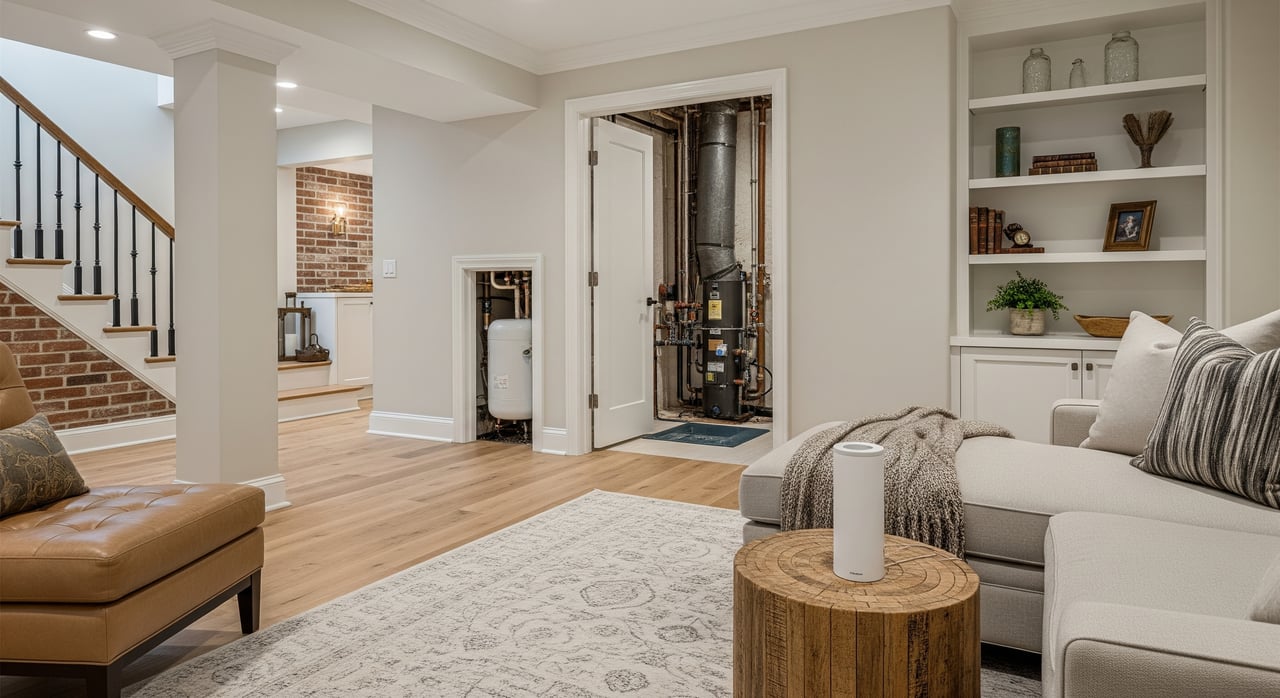
You cannot see or smell radon, but it can be one of the most important indoor air risks to check in your New Providence home. If you are buying, selling, or simply want peace of mind, a clear plan for testing will help you protect your family and your investment. In this guide, you will learn why testing matters in Union County, how to choose the right test, what your results mean, and what to keep for future resale. Let’s dive in.
Why test in New Providence
Radon is a naturally occurring radioactive gas that forms in soil and rock and can enter homes through cracks and openings. Long-term exposure can increase lung cancer risk. The U.S. Environmental Protection Agency sets an action level of 4 pCi/L and recommends mitigation at or above that result, while noting there is no known safe level of radon exposure. You can review the health guidance on the EPA’s radon page.
Across New Jersey, including Union County, elevated indoor radon has been measured in many communities. The EPA’s map of radon zones shows moderate to high potential across parts of the state. Levels vary from house to house, even on the same block, so you cannot rely on a neighbor’s results. Testing your New Providence home is the only way to know your level.
Testing is especially important if you are entering a real estate transaction, if your home has never been tested, if past testing took place in a different season, or after renovations like a finished basement or addition.
How to test in New Jersey
Choose the right test
- Short-term test (2–7 days). Charcoal canisters or electronic devices provide a quick screening. These are common for transactions and initial checks.
- Continuous radon monitor (CRM). A professional-grade device logs hourly readings and can flag unusual patterns. CRMs are widely used in transactions because they follow standard protocols and help detect tampering.
- Long-term test (90 days to 1 year). Alpha-track or similar devices capture seasonal variation and are the best single indicator of long-term exposure.
For the best picture of long-term exposure, use a long-term test or repeat short-term tests in different seasons. During a sale, buyers and sellers often rely on a short-term test or CRM performed by a certified professional.
Where and when to place
Place the device on the lowest livable level that you use regularly, such as a finished basement or the lowest occupied floor. Follow device instructions for height, room selection, and distance from drafts or exterior doors to avoid skewed results. Test during normal closed-house conditions when possible to keep readings accurate.
Use certified professionals for transactions
New Jersey maintains a certification program for radon measurement and mitigation through the New Jersey Department of Environmental Protection (NJDEP). For real estate transactions in New Providence, it is strongly advised to hire an NJ-certified radon measurement professional who uses approved methods and provides documentation buyers and lenders will accept. You can verify credentials on the NJDEP Radon Program site. National credentials from programs like NRPP and the protocol resources at AARST are also common.
Understand your results
- Below 4 pCi/L. The EPA does not require mitigation, but it recommends considering further action at lower levels because there is no known safe level. Some homeowners choose to mitigate near 2–4 pCi/L, especially if there are other risk factors.
- 4 pCi/L or higher. The EPA recommends mitigation to reduce levels as low as reasonably achievable. Radon reduction systems are effective and often reduce levels quickly. Learn more about results and next steps on the EPA radon overview.
Because radon varies by day and season, follow-up testing is a smart step. If a short-term test is at or above 4 pCi/L, conduct a second short-term test or a long-term test to confirm.
Mitigation basics in New Providence
Most homes are treated with active soil depressurization (also called sub-slab depressurization). A certified mitigator evaluates your foundation, then installs piping and a fan to draw radon from beneath the slab or membrane and vent it safely above the roofline. Crawlspaces often use sub-membrane systems.
After installation, a post-mitigation test confirms performance. Many pros use a CRM shortly after startup, followed by a longer-term test later. Fans run continuously and may need replacement over time. The EPA’s radon resources explain common system types and expectations.
Documentation to keep for resale
Clear, professional records help buyers feel confident and keep your transaction smooth. Keep these on file and share them with your agent when listing:
- Pre-mitigation test report with date, device type, location, and result in pCi/L.
- Mitigation system details: installer name, NJDEP certification number, installation date, fan model and serial, system location, and a simple site diagram.
- Post-mitigation test results showing reduced levels, ideally from a certified professional using a CRM or long-term device.
- System operation and maintenance instructions, including fan run guidance and signs of failure.
- Proposal and invoice showing installer credentials and any warranty terms.
Find certified pros near you
- Verify New Jersey radon credentials and find certified providers on the NJDEP Radon Program site.
- Check national certification and protocol resources at AARST and the NRPP directory.
Ask for certification numbers, proof of insurance, and a written testing or mitigation plan before work begins.
Quick homeowner timeline
- Plan your test. If you have not tested your New Providence home, start with a long-term test for best accuracy or schedule a professional CRM test.
- Follow protocols. Place the device on the lowest livable level and keep closed-house conditions.
- Review results. Below 4 pCi/L may not require mitigation, but consider next steps. At or above 4 pCi/L, plan follow-up testing or mitigation.
- Hire certified pros. For transactions, use an NJDEP-certified measurement provider. If mitigation is needed, get written proposals from NJDEP-certified mitigators.
- Confirm performance. Complete post-mitigation testing and keep all documents for your records and future disclosure.
Local guidance for buyers and sellers
During a New Providence home sale, buyers often request a radon test as part of inspections. A certified measurement report using an approved device is the cleanest way to satisfy contract needs, reassure both parties, and keep the closing on track. If mitigation is needed, treat it as a building improvement that can be documented clearly for the next owner. Your records become part of a simple, credible story about indoor air quality and ongoing care.
Ready for tailored guidance? For clients preparing to buy or sell, we help you plan the right testing approach, coordinate trusted NJDEP-certified referrals, and package your documentation so your listing shines. Reach out to Shannon Xavier to get started.
FAQs
Do I need radon testing if my neighbor’s house is low?
- No. Radon varies house to house, even on the same street. Testing your specific home is the only way to know.
Where should I place a radon test in a New Providence home?
- Place the device on the lowest livable level you use regularly, following the device instructions and professional placement guidance.
Is a DIY kit acceptable for a New Jersey home sale?
- DIY kits are useful for screening, but for a transaction you should hire an NJDEP-certified measurement professional who uses approved methods and provides an official report.
What if my result is between 2 and 4 pCi/L?
- The EPA notes there is no known safe level and suggests considering mitigation at lower levels. Many homeowners retest or choose to mitigate near this range.
How disruptive is radon mitigation and how long does it last?
- Most systems install with minimal disruption. The fan runs continuously and may need replacement over time. Retest every 2–5 years or after major renovations.
Do I need to disclose radon when selling in New Jersey?
- Sellers should disclose known environmental conditions. Radon test results and any mitigation history are commonly part of that disclosure, so keep clear records.
