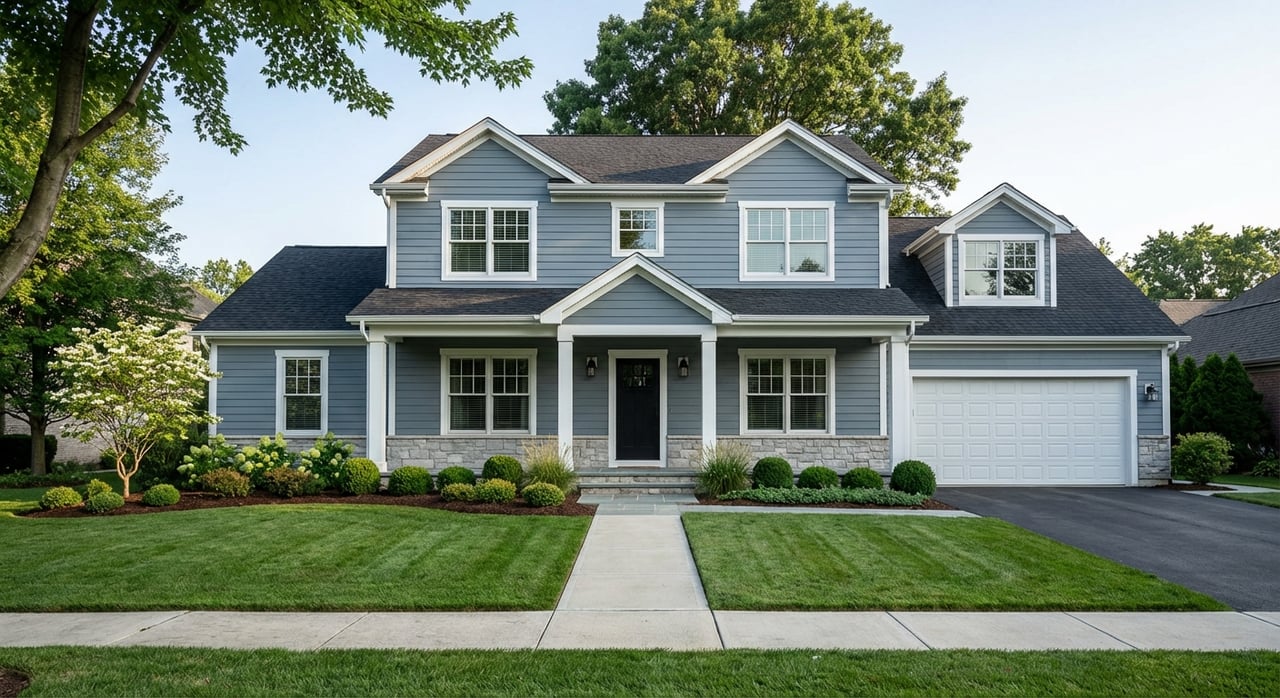
Craving more space, a bigger yard, and a floor plan that finally fits your life? If Livingston is on your short list, you are not alone. Many buyers look here when they are ready to trade up for more square footage, strong public schools, and a suburban pace with workable NYC and North Jersey commutes. In this guide, you will learn what to expect on price, taxes, housing stock, commute options, and how to structure a smooth move-up purchase. Let’s dive in.
Why Livingston works for move-up buyers
Livingston Township is a mid-sized Essex County suburb with a high rate of owner-occupied single-family homes. That stability and housing mix appeal to buyers who want to move from a starter home into something larger. You will find a built-out town with established neighborhoods, parks, and local services.
The numbers back that up. According to the U.S. Census QuickFacts, Livingston’s population is about 31–32k and residents report a mean travel time to work of about 37.6 minutes. Those mixed commute patterns reflect the drive, shuttle-plus-rail, and direct bus options many residents use (Census QuickFacts).
Schools are another key draw. Livingston Public Schools receive high marks in third-party summaries. You can review ratings and program overviews on the district’s profile page to see if offerings align with your goals (Niche district profile).
What homes look like in Livingston
Predominantly single-family homes
Most of Livingston’s occupied homes are single-family and owner-occupied. This shapes your search if you are upsizing, since the bulk of larger inventory will be detached houses rather than attached options (housing composition reference).
Lot size and outdoor space
Expect typical suburban lots. Many mid-market listings in established neighborhoods fall roughly in the 0.15 to 0.40 acre range. You will see both smaller and larger parcels depending on the section, with some cul-de-sacs and estate pockets offering more land. For most buyers, that size range supports a comfortable yard, a deck or patio, play space, and room for landscaping.
Styles, ages, and floor plans
Livingston’s housing stock spans mid-century and post-war eras alongside newer infill. Common styles include split-levels, ranches, and Colonial-revival homes. You will also find replacement new construction in select areas. Functionally, many upsizers target 3 to 5 bedrooms, an open or semi-open main level, a finished or finishable basement, and a primary suite with a modern bath. The trade-off you will weigh is age versus finish level: classic lots and established streets often come with older systems, while new builds offer turnkey convenience at a premium.
Budget and carrying costs to plan for
Price benchmarks
Recent provider snapshots point to a move-up market that often starts around the low seven figures. A Redfin-based snapshot reported a median sold price around $1,122,500 for Livingston Township on a 12-month basis as of June 2025 (market overview). Different data vendors may publish slightly different figures, but the general takeaway is that many updated 3 to 5 bedroom homes trade at $1M+. Active listings often skew higher depending on location, size, and finish level.
Inventory is typically limited in the larger, turnkey segment, and well-presented homes can move quickly. Median days on market and sale-to-list ratios can tighten when a renovated property in a preferred section hits the market, so plan for competition on the most desirable listings (market overview).
Property taxes and affordability
Property taxes are a meaningful part of your monthly budget in Essex County. Local reporting on state tax tables shows Livingston’s average annual property tax bill around $16,000 for 2022. While your actual taxes will depend on the assessed value of the home you buy, it is smart to model taxes as a separate monthly line item when assessing affordability (property tax context).
A quick example: If you purchase near the recent median benchmark and your annual taxes are roughly $16,000, that is about $1,333 per month for taxes alone, before principal, interest, and insurance. Ask your lender to run scenarios with current interest rates, 20 percent down, and the tax estimate for any property you are considering so you see the complete monthly picture.
Commute options that work
No in-town rail, but multiple paths
Livingston does not have an NJ Transit rail station within township limits. Many residents use a combination of the township shuttle to South Orange, direct commuter buses, or driving to reach Newark, Jersey City, or Manhattan. The mean commute time of about 37.6 minutes underscores that residents use varied routes depending on destination and schedule (Census QuickFacts).
Livingston Express Shuttle to South Orange
The Township operates the Livingston Express Shuttle between the Livingston Mall park-and-ride and South Orange Station. The schedule is timed to connect with Midtown Direct and Hoboken-bound NJ Transit trains during peak hours. This setup effectively creates a nearby, reliable rail connection for many commuters. You can review the overview page and the current PDF timetable for specifics:
- Program overview: Livingston Express Shuttle
- Schedule PDF: Shuttle schedule and connections
A practical example: a morning shuttle from Livingston Mall to South Orange typically aligns with a Midtown Direct train into New York Penn. Depending on the exact departure you choose, plan roughly an hour or more door to door, including shuttle, train time, and station transfers. Always confirm the latest shuttle PDF and NJ Transit timetable before you go.
Direct commuter bus to Port Authority
Community Coach operates Route 77, a direct bus from Livingston Mall to the Port Authority Bus Terminal. This one-seat ride is a popular option for commuters who prefer to avoid a transfer. Check the operator site for the current schedule and any routing changes (Coach USA route details).
Driving routes
If you drive, the main arteries are I-280, Route 10, the Garden State Parkway, and connections to I-95 and bridge-tunnel corridors. Travel times depend on time of day and destination, so test your route during the hours you plan to commute.
Renovate or buy turnkey
Livingston presents two clear paths for upsizers, and both can work well if you plan carefully.
Buy-and-renovate
Older mid-century homes on larger lots often lend themselves to targeted updates and additions. Common scopes include kitchen and bath remodels, finishing a basement, adding a primary suite, or upgrading systems like electrical and HVAC. If this path appeals to you, build a budget with a 10 to 20 percent contingency, and factor in permitting timelines. Obtain at least two to three contractor bids, and consult the local building department on zoning, setbacks, and variance requirements before you close.
Buy turnkey or new construction
On the other side of the spectrum, you can pay a premium for renovated or new-construction homes that deliver modern systems, energy efficiency, and move-in convenience. In competitive moments, these listings can draw multiple offers. Your agent can help weigh condition, location, and recent comps so you understand where a premium is justified and how to write a winning, well-protected offer.
How to structure your move-up purchase
Your financing and timing plan can be as important as the house you choose. Here are the most common paths, with trade-offs to consider.
Sell first, then buy
- Pros: Lower risk, no overlap on two mortgages, better clarity on your budget once your sale is complete.
- Cons: You may need temporary housing or to negotiate a rent-back after your sale if inventory is tight.
Buy first with bridge financing, HELOC, or cash
- Pros: Lets you write a stronger, non-contingent offer and move quickly on the right home.
- Cons: Bridge loans are short-term and higher interest, require qualifying for multiple payments, and need a clear exit plan. Read a primer to understand structures and costs (bridge loan overview).
Buy with a home-sale contingency
- Pros: More protection if your current home takes longer to sell.
- Cons: Less competitive in a seller-leaning segment. There are middle-ground options, such as shorter contingency periods or appraisal-gap strategies, that can balance protection and strength.
Align timelines with rent-back or simultaneous closings
With the right terms, you can coordinate closings so your move is efficient. In New Jersey, it is standard to involve an attorney during attorney review and for final contract language. Clear dates, responsibilities, and insurance details help avoid surprises.
Quick prep checklist for Livingston upsizers
- Get pre-approved and ask your lender to model payments with current rates, 20 percent down, and a realistic property tax estimate.
- Set your must-haves and nice-to-haves: beds, baths, office space, basement, yard size, garage, and any accessibility needs.
- Do a commute test. Try the shuttle-to-rail route, the direct bus, and your preferred drive during your peak hours.
- If considering an older home, schedule a thorough inspection and get two to three contractor bids for any planned work.
- Review recent sales with your agent so you understand price bands for renovated versus unrenovated homes.
- Align timelines. Decide whether you will sell first, buy first with a bridge or HELOC, or use a contingency and rent-back.
Ready to explore Livingston with a clear plan and a calm, concierge approach? Reach out to Shannon Xavier to map your next move with local insight, smart strategy, and elevated service.
FAQs
What do move-up homes in Livingston typically cost?
- A recent Redfin-based snapshot reported a median sold price around $1,122,500 on a 12-month basis as of June 2025, which places many 3 to 5 bedroom homes in the $1M+ range (market overview).
How high are property taxes for a typical Livingston home?
- Local reporting on state tables shows an average annual property tax bill around $16,000 for 2022, though your actual bill will depend on the home’s assessed value (property tax context).
Is there a train station in Livingston for NYC commuters?
- No in-town rail station. Many residents use the township’s Express Shuttle to South Orange to connect with Midtown Direct trains, take the Community Coach bus to Port Authority, or drive based on destination and schedule (Express Shuttle, Coach USA route).
What lot sizes should I expect when upsizing in Livingston?
- Most mid-market single-family parcels fall in the 0.15 to 0.40 acre range, with some larger lots in estate sections and cul-de-sacs. Exact size varies by neighborhood and street.
How competitive is the Livingston market for renovated homes?
- Inventory for larger turnkey properties is often limited, and well-presented homes can draw strong interest. Keep your pre-approval current and be ready to move quickly on the right fit (market overview).
